Visit Us On:






Crime, they say, doesn't pay. But for a select few, it paid billions. The criminals on this list amassed fortunes that rivaled—and sometimes surpassed—those of the world's most successful legitimate business leaders. Their stories span continents and decades, from the cocaine-fueled 1980s to the crypto crashes of the 2020s.
What unites these individuals isn't just their wealth, but the scale of their operations, the sophistication of their schemes, and ultimately, the dramatic downfalls that awaited most of them. Here are the 16 wealthiest criminals of the last century, ranked by their peak estimated net worth.
1. Bernie Madoff — $64.8 Billion
The "Finance Lord" of Fraud
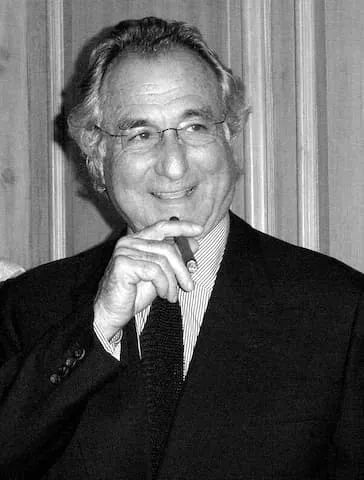
While drug cartels moved cocaine, Bernie Madoff moved something equally addictive: the promise of guaranteed returns. The former chairman of NASDAQ ran the largest Ponzi scheme in history, with client statements claiming a total value of nearly $65 billion at the time of his arrest in December 2008.
Madoff's scheme began in the 1960s when he couldn't admit to losing money for his father-in-law's friends. Each lie led to another, and over five decades, he created an elaborate fiction of profitable trades that never existed. His bookkeeper would read old editions of The Wall Street Journal to identify the best-performing stocks from the previous month, then fabricate records showing clients had purchased them at the right time.
The scheme's sophistication was remarkable. When SEC investigations threatened to expose the fraud, Madoff's team worked through the night to create matching paperwork. They even hired programmers to duplicate the unique fonts of legitimate financial statements, holding their forgeries up to windows to compare them against the originals.
When the 2008 financial crisis triggered a wave of redemption requests, Madoff couldn't cover the $1.5 billion his clients demanded with only $300 million in the bank. He confessed to his sons, who immediately contacted authorities. Madoff received a 150-year sentence and died in prison in April 2021.
Source: FBI Famous Cases: Bernie Madoff
2. Pablo Escobar — $30–60 Billion
The King of Cocaine
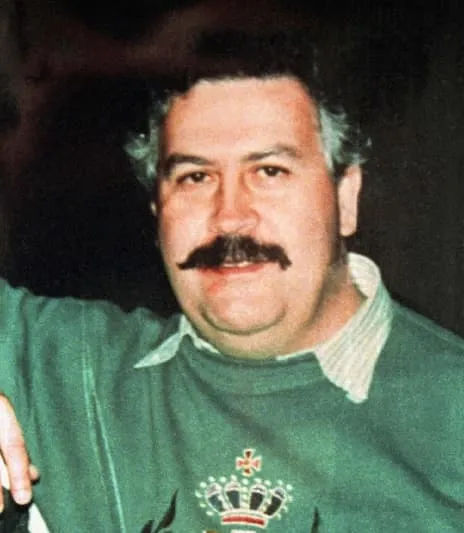
Pablo Escobar remains the most famous drug lord in history. At his peak in the early 1990s, the Colombian leader of the Medellín Cartel was worth an estimated $30 billion—a figure that translates to over $60 billion today. His cartel reportedly earned $420 million per week, and he was so wealthy that he spent $2,500 monthly just on rubber bands to wrap his cash.
Escobar's journey from expelled high school student to cocaine kingpin began when he drove coca paste from the Andean Mountains to laboratories in Medellín. By 26, he had transitioned from courier to smuggler. By 30, he owned Hacienda Nápoles—a $63 million estate complete with a private zoo, helicopter, and a car that once belonged to Al Capone.
His operation was brutally efficient. Drug pilots ran flights at twice the aircraft's safe weight, earning a million dollars per trip. Only 1 in 100 flights was even detected by U.S. Customs. The cartel used submarines, fishing boats, and even carrier pigeons to move product.
Escobar's trademark was a chilling choice he offered to anyone who stood in his way: plata o plomo—silver or lead, meaning accept a bribe or face a bullet. He ordered the assassination of Colombia's justice minister, bombed a commercial airliner, and waged open war against the state. He was killed by Colombian police in December 1993.
Sources: OJP/NIJ Virtual Library; PBS Frontline
3. Sam Bankman-Fried — $26 Billion
The Crypto Collapse

Before the spectacular collapse of his cryptocurrency exchange FTX in November 2022, Sam Bankman-Fried—known as SBF—had a paper net worth of $26 billion. The MIT graduate positioned himself as the responsible face of crypto, cultivating a disheveled image and sleeping on beanbags in his office.
The reality was far darker. Bankman-Fried had secretly directed programmers to alter FTX's computer code, allowing his private hedge fund, Alameda Research, to withdraw effectively unlimited amounts of customer deposits. Over $8 billion in customer funds were misappropriated to make investments, political contributions, and purchase real estate.
His fraud was exposed when a leaked balance sheet revealed Alameda's precarious financial position. Within days, FTX faced a liquidity crisis as customers rushed to withdraw funds. The exchange collapsed, and Bankman-Fried was arrested in the Bahamas.
In March 2024, Bankman-Fried was sentenced to 25 years in federal prison after being convicted on seven counts including wire fraud, conspiracy, and money laundering. The judge noted his complete lack of remorse and accused him of perjuring himself three times during the trial.
Sources: U.S. Department of Justice; ACFE Insights
4. Amado Carrillo Fuentes — $25 Billion
The Lord of the Skies
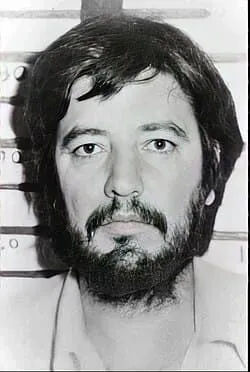
Amado Carrillo Fuentes earned his nickname "El Señor de los Cielos" (The Lord of the Skies) by revolutionizing cocaine transportation. As head of the Juárez Cartel in Mexico, he operated a fleet of Boeing 727s capable of carrying multi-ton shipments of cocaine from Colombia to Mexico, then into the United States.
His operation was audacious in scale. While other traffickers moved cocaine in cars and small planes, Fuentes thought bigger—commercial jetliners that could move more product in a single flight than many traffickers moved in a year. His net worth peaked at an estimated $25 billion.
The Juárez Cartel's preferred method was tractor-trailers with narcotics concealed by cover loads of produce, but Fuentes' aerial fleet was what made him legendary. His organization established distribution cells in cities across the United States, from Laredo to Chicago to New York.
Fuentes died under mysterious circumstances in July 1997, reportedly during plastic surgery intended to change his appearance and evade capture. His organization fragmented after his death, with remnants later targeted in Operation Marquis, which resulted in over 261 arrests.
Source: FBI Archives: Operation Marquis
5. Joaquín "El Chapo" Guzmán — $12–14 Billion
The Tunnel King

For decades, Joaquín Guzmán Loera was the world's most powerful drug trafficker. As leader of the Sinaloa Cartel, he earned his nickname "El Rapido" for how quickly he transported drugs from Mexico to the United States. After escaping from a Mexican prison in 2001 by hiding in a laundry cart, he built an empire worth billions.
The methods his cartel used were nothing short of industrial: fishing boats, submarines, carbon fiber airplanes, trains with secret compartments, and—most famously—transnational underground tunnels. These tunnels, some equipped with lighting, ventilation, and rail systems, became El Chapo's signature.
Guzmán's personal arsenal included a gold-plated AK-47 and three diamond-encrusted handguns emblazoned with his initials. He maintained control through an army of lethal bodyguards and a sophisticated encrypted communications network. His cartel bribed everyone from local police to high-ranking military officers.
After multiple escapes and captures, Guzmán was extradited to the United States in 2017. Following a three-month trial featuring testimony from 14 cooperating witnesses, he was convicted on all counts and sentenced to life plus 30 years. The court ordered him to pay $12.6 billion in forfeiture.
Source: U.S. Department of Justice
6. Semion Mogilevich — $10 Billion
The Boss of Bosses
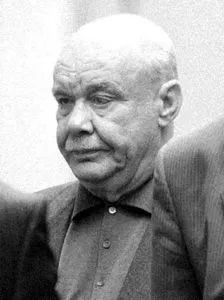
The FBI has called Semion Mogilevich the "boss of bosses" of most Russian Mafia syndicates in the world. Operating from Moscow with deep roots in Western European and American finance, his criminal organization spans over 30 countries and is believed to control a fortune of approximately $10 billion.
Born in Kyiv, Ukraine, in 1946, Mogilevich built his empire on an extraordinary range of criminal enterprises: murder, extortion, trafficking in women, weapons trafficking, money laundering, and sophisticated financial fraud. In 1995, the Russian Ministry of the Interior identified him as commanding more than 300 criminal associates.
His white-collar crimes were particularly audacious. In 1997, the FBI initiated an investigation into YBM Magnex, a Budapest-based company that Mogilevich used to perpetrate securities fraud. The scheme demonstrated how Russian organized crime had evolved to penetrate global financial markets.
Mogilevich remains at large. The U.S. Department of State offers a $5 million reward for information leading to his arrest. He holds Russian, Israeli, and Ukrainian citizenship, and despite international indictments, he has thus far evaded capture from his base in Russia.
7. Allen Stanford — $7 Billion
The Caribbean Con Man
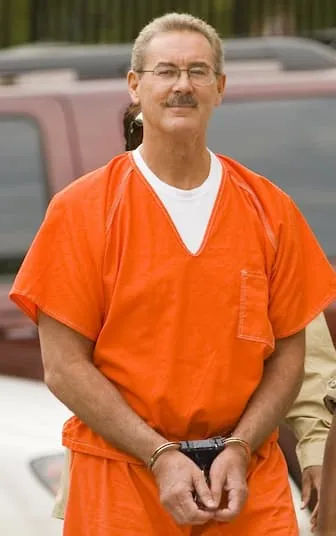
R. Allen Stanford lived like royalty in the Caribbean, complete with a 112-foot yacht, six private planes, and a cricket tournament bearing his name. Behind the glamour was a 20-year investment fraud that defrauded investors of more than $7 billion through his Stanford International Bank.
Stanford's scheme was classic Ponzi: his offshore bank in Antigua sold certificates of deposit promising premium returns over U.S. rates. Marketing materials claimed the funds were invested in conservative, highly liquid securities. In reality, Stanford diverted billions into his own failing businesses—restaurants, real estate projects, and gambling trips to Las Vegas.
When the 2008 financial crisis caused a slump in new CD sales and record redemptions, Stanford announced he had personally invested $741 million to strengthen the bank. This was a lie. To create the illusion, his accountants inflated a piece of real estate purchased for $63.5 million to a value of $3.1 billion—a 5,000% increase with no appraisals or improvements.
Stanford was sentenced to 110 years in prison—20 years for conspiracy, 20 years each for four counts of wire fraud, and additional time for obstruction and money laundering. The judge called it "one of the most egregious frauds ever presented to a trial jury in federal court."
8. Dawood Ibrahim — $6.7 Billion
The Don of South Asia

Dawood Ibrahim commands D-Company, a 5,000-member criminal syndicate operating across Pakistan, India, and the United Arab Emirates. His empire—estimated at $6.7 billion—spans narcotics trafficking, extortion, smuggling, contract killing, and even the Indian film industry, where he has extorted producers and allegedly ordered the assassination of directors.
Ibrahim began as a low-level smuggler in Bombay in the 1970s. His transformation into a terrorist came after the destruction of the Babri Mosque in 1992 and the subsequent riots that killed hundreds of Muslims. Believing the Indian government acted indifferently, he retaliated. With assistance from Pakistan's Inter-Services Intelligence agency, D-Company launched bombing attacks in March 1993 that killed 257 people.
Since then, Ibrahim has deepened alliances with Lashkar-e-Taiba and Al Qaeda, sharing smuggling routes and providing financing. Press accounts have reported that his network may have provided the boat used by terrorists who killed 173 people in Mumbai in November 2008.
The U.S. Treasury designated Ibrahim as a Specially Designated Global Terrorist in 2003 and a Significant Foreign Narcotics Trafficker in 2006. He remains at large, reportedly operating from Karachi, Pakistan.
Source: Long War Journal
9. Khun Sa — $5 Billion
The Opium King

For three decades, Khun Sa dominated the Golden Triangle heroin trade. The Burmese warlord commanded a private army of 20,000 men and controlled vast swathes of territory along the Thai-Myanmar border, amassing an estimated fortune of $5 billion.
Khun Sa's relationship with governments was complex. He was first arrested in 1969 after meeting with ethnic rebel groups, but his militia secured his release by kidnapping two Soviet doctors. He maintained working relationships with Thai and Myanmar security agencies, providing valuable intelligence in exchange for tolerance of his drug operations.
His headquarters at Homong, opposite the Thai town of Mae Hong Son, was never attacked by the Myanmar Army. The military tolerated his presence because his forces fought ethnic and communist rebels. Khun Sa's organization invested heavily in construction projects and businesses in Thailand.
In January 1995, Khun Sa surrendered and moved to Yangon, Myanmar, where he lived comfortably until his death in October 2007. His army was disbanded, but the drug trade he pioneered continues in the Golden Triangle to this day.
10. José Gonzalo Rodríguez Gacha — $5 Billion
"El Mexicano"

Known as "El Mexicano" for his love of Mexican music and food, José Gonzalo Rodríguez Gacha was a high-ranking member of the Medellín Cartel and a pioneer of new drug routes. At his peak, he may have been wealthier than Pablo Escobar himself, with an estimated fortune of $5 billion.
Gacha was legendary for his appetite for extreme violence. While Escobar became the public face of the cartel, Gacha handled the dirty work with a ruthlessness that terrified even his partners. He commanded an army of mercenaries imported from Israel and owned vast stretches of Colombian land.
His downfall came through an informant named Jorge Velásquez, nicknamed "El Navegante" (The Sailor), who was the captain of Gacha's speedboats. DEA agents met Navegante in clandestine locations in Bogotá and promised him $1 million if he revealed Gacha's location.
On December 15, 1989, Colombian police helicopters tracked Gacha to a cluster of beachfront cabanas. Gacha and his 17-year-old son Freddy fled in a red truck, disguised as farmworkers. When Freddy opened fire on the helicopters with grenades, they were overwhelmed. Both were killed in a barrage of gunfire.
Source: GQ Magazine: The Real Narcos
11. Leona Helmsley — $5 Billion
The Queen of Mean

Leona Helmsley became infamous for a single quote attributed to her by a former housekeeper: "We don't pay taxes; the little people pay taxes." As the self-proclaimed queen of the Helmsley Hotels chain, she controlled a real estate empire worth an estimated $5 billion—and systematically cheated the government to keep more of it.
Helmsley's tax fraud was breathtaking in its pettiness. She diverted company funds to pay for renovations to her 28-room mansion in Greenwich, Connecticut, including a new swimming pool and a $130,000 indoor/outdoor stereo system. She billed the business for underwear, a $45,000 silver clock shaped like the Helmsley Building, and even a leg waxing.
Her 1989 trial drew intense media interest, with testimony about her firing household employees at Christmastime for petty infractions and demanding cash kickbacks from hotel suppliers. When asked to speak before sentencing, she sobbed: "I'm more humiliated and shamed than anybody could ever imagine."
Judge John Walker was unmoved, calling her crimes the product of "naked greed" and "an arrogant belief that she was above the law." Helmsley was sentenced to four years in prison and fined $7.1 million. As she left the courthouse, crowds shouted "The queen is dead!" and "Bitch, you should have got a thousand years!"
Source: Los Angeles Times
12. The Ochoa Vásquez Brothers — $3–6 Billion
The Forgotten Founders

Often overshadowed by Pablo Escobar in popular culture, the three Ochoa brothers—Jorge Luis, Juan David, and Fabio—were equally powerful co-founders of the Medellín Cartel. Together, they amassed a collective fortune estimated between $3 billion and $6 billion, and Forbes Magazine listed them among the world's billionaires from 1987 to 1992.
The Ochoas came from a wealthy family of cattle breeders and ranch owners in Medellín. Their entry into cocaine trafficking began in the 1970s when the youngest brother, Fabio, traveled to Miami. They brought business acumen and legitimacy to the cartel, handling logistics and the legal side of operations.
The brothers also founded Colombia's first paramilitary group, "Death to Kidnappers," after the M-19 guerrilla movement kidnapped their sister. Under Jorge's command, the group quickly secured her release—then expanded operations to torture and kill hundreds of leftist leaders.
Facing extradition to the United States, the elder brothers surrendered to Colombian authorities in 1991 and were released in 1996. Fabio resumed trafficking, was re-arrested in 1999, extradited to the U.S., and sentenced to 30 years. He was released and deported to Colombia in December 2024.
Source: Colombia One
13. Gilberto & Miguel Rodríguez Orejuela — $3 Billion
The Chess Players

The Rodríguez Orejuela brothers built the Cali Cartel as a direct rival to Pablo Escobar's Medellín operation. Where Escobar embraced violence and publicity, the brothers preferred what they called a "corporate" approach—sophisticated logistics, political corruption, and calculated patience. After Escobar's fall, they controlled an estimated 80% of the world's cocaine market.
Their organization was responsible for importing more than 200,000 kilograms of cocaine into the United States, generating over $2.1 billion in drug proceeds. They concealed shipments in concrete posts, ceramic tiles, frozen vegetables, coffee, chlorine gas cylinders, and even pumpkins.
The brothers laundered their fortune through a pharmaceutical empire that included more than 400 retail drug stores and laboratories across Colombia. Even after being imprisoned in Colombia in 1995, they continued running the cartel through Miguel's son, developing new routes and methods.
Extradited to the United States in 2004 and 2005, both brothers pleaded guilty and were sentenced to 30 years in prison. They agreed to forfeit $2.1 billion in narcotics-related assets worldwide. Their conviction effectively ended the Cali Cartel.
14. Carlos Lehder — $2.7 Billion
The Island Buyer

Carlos Lehder revolutionized cocaine smuggling by doing something no one else had thought to do: buying an entire island. Norman's Cay in the Bahamas became a private transhipment point where planes from Colombia could land, refuel, and continue to Florida. At his peak, Lehder's fortune approached $3 billion.
Lehder's path to the cartel began in a Connecticut federal prison, where he served time for smuggling stolen vehicles. Upon release, he taught himself to fly small planes and became an expert at flooding the United States with drugs. The parties on Norman's Cay became legendary—but by day, Lehder patrolled his island armed with rifles and hand grenades.
His relationship with Escobar soured after Lehder killed one of Escobar's top hitmen at Hacienda Nápoles. Paranoid that Escobar wanted him dead, Lehder was finally arrested in 1987 and became the first Colombian cartel boss extradited to the United States. He later learned that Escobar himself had betrayed him to authorities.
Sentenced to life plus 135 years, Lehder served 33 years before his sentence was reduced for testifying against Panamanian dictator Manuel Noriega. He was released in 2020 and now lives in Frankfurt, Germany, where he has written a memoir about his cartel years.
Source: El País (English)
15. Griselda Blanco — $2 Billion
The Black Widow

Pablo Escobar reportedly once said, "The only man I was ever afraid of was a woman named Griselda Blanco." Known as the "Cocaine Godmother" and the "Black Widow" (for the fate of her three husbands, all of whom died young), Blanco pioneered the cocaine trade in Miami during the 1970s and 80s, amassing a fortune estimated at $2 billion.
Born into poverty in Colombia, Blanco allegedly committed her first murder at age 11, shooting a kidnapped boy when his family was slow to pay ransom. By 13, she had added counterfeiting and prostitution to her criminal resume. She designed a line of custom lingerie with hidden compartments to smuggle cocaine, understanding that women were less likely to arouse suspicion.
Her violence was legendary. In the infamous Dadeland Mall massacre of 1979, her assassins killed a rival dealer until he "looked like Swiss cheese." When a cartel member kicked one of her sons, she ordered his assassination—but hitmen accidentally killed his 2-year-old son instead. Blanco reportedly had no regrets.
Arrested in 1985, Blanco pleaded guilty to three murders and served nearly 20 years. Released in 2004, she was deported to Colombia, where she lived quietly until September 2012, when she was shot dead outside a butcher shop by a gunman on a motorcycle—a classic Blanco-style assassination.
Source: A&E True Crime
16. Meyer Lansky — $300–600 Million
The Mob's Accountant
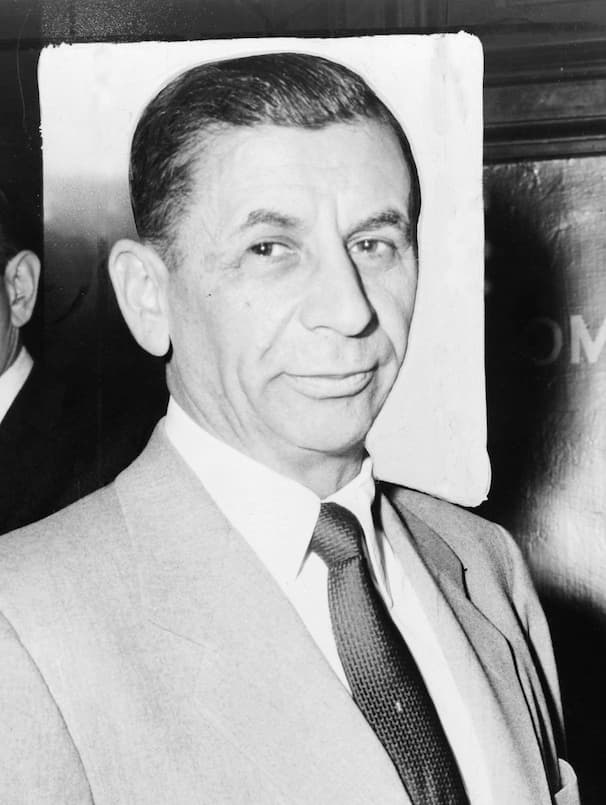
Meyer Lansky was the financial mastermind behind the National Crime Syndicate, the governing body of organized crime in America. While his official estate was small when he died in 1983, the FBI believes he had hidden as much as $600 million in offshore accounts and Swiss banks—over $1.8 billion in today's money. He essentially invented modern money laundering.
Unlike the flashy mobsters he worked with—Lucky Luciano, Frank Costello, Joe Adonis—Lansky preferred the shadows. He organized gambling operations from Saratoga Springs to Havana, investing mob money into legitimate businesses and pioneering the offshore banking techniques that criminals still use today.
Remarkably, Lansky served only one brief stint in jail: in 1953, he was sentenced to just three months for his role in illegal gambling operations in Saratoga, New York. Even then, reports suggest he had the run of the cellblock, ate delivered meals, and was released early for good behavior.
The government spent decades trying to prosecute Lansky for tax evasion and to deport him, but he consistently outmaneuvered them. When he died of lung cancer in 1983, his official estate was valued at just $57,000—but investigators believe his hidden fortune remains scattered in accounts around the world, lost to history.
Source: The Mob Museum
The Bottom Line
What do these 16 criminals have in common beyond their staggering wealth? Nearly all of them eventually faced justice—whether through lengthy prison sentences, violent deaths, or lives spent in hiding. The fortunes they built proved surprisingly fragile, vulnerable to law enforcement seizure, market collapse, or betrayal by the very associates who helped build them.
Yet their stories continue to fascinate us. Perhaps it's the sheer audacity of their schemes, the scale of their operations, or the glimpse they offer into a shadow economy operating parallel to our own. From Madoff's fake trade confirmations to Escobar's submarine fleet, these criminals demonstrated extraordinary creativity in pursuit of extraordinary wealth.
The lesson may be simple: crime can pay spectacularly well—for a while. But as every name on this list demonstrates, the final accounting rarely favors the criminal.
Visit Us On: