Visit Us On:






I've been staring at these architectural renderings for half an hour now, foolishly confident in my ability to decrypt them, and I keep coming back to the same question I predict you're asking too: are we about to watch our elected officials dump nearly two hundred million dollars into what some residents have already dubbed "lipstick on a pig"?
▶ Watch or Listen to this Article
Prefer to watch or listen? Click play to check out the video version of this article.
The Bottom Line
- The Proposal: $189M renovation and expansion of the 40-year-old Pensacola Bay Center, including an $84.4M event center, $29.8M practice ice rink, and $71M arena renovation
- Funding Source: Tourist Development Tax (TDT) revenue - legally restricted funds that must be bonded before July 2026 due to potential legislative changes
- Projected Returns: Study claims $3.8M annual net income by 2031 and $60M in total economic impact - a bold claim for a facility that has turned a profit only once (a $4.8K surplus in 1997)
- The Mobile Factor: Alabama's new $300M, 10,000-seat arena will compete directly for concerts, conventions, and major events starting soon
- The Parking Problem: Plans require 1,550 additional parking spaces with no concrete solution beyond "maybe a parking garage"
- Pensacon's Struggle: The region's largest convention has pumped $30 million into the local economy since 2014 but has clearly outgrown the Bay Center's capacity
- Community Divide: North Escambia residents question downtown investment while their roads crumble, though TDT funds cannot legally be redirected to infrastructure
- Historic Context: The Bay Center has operated at a loss for nearly its entire 40-year existence and faces chronic deferred maintenance issues, including smell complaints and failing air conditioning
The Proposal
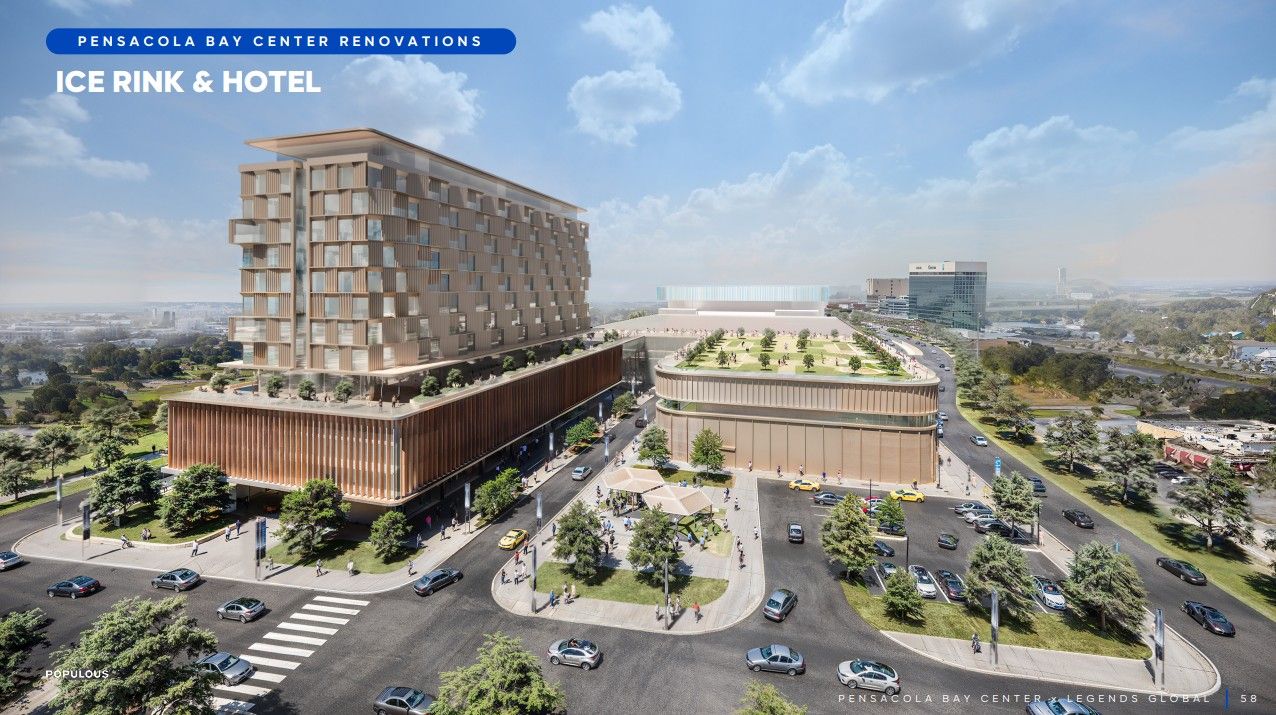
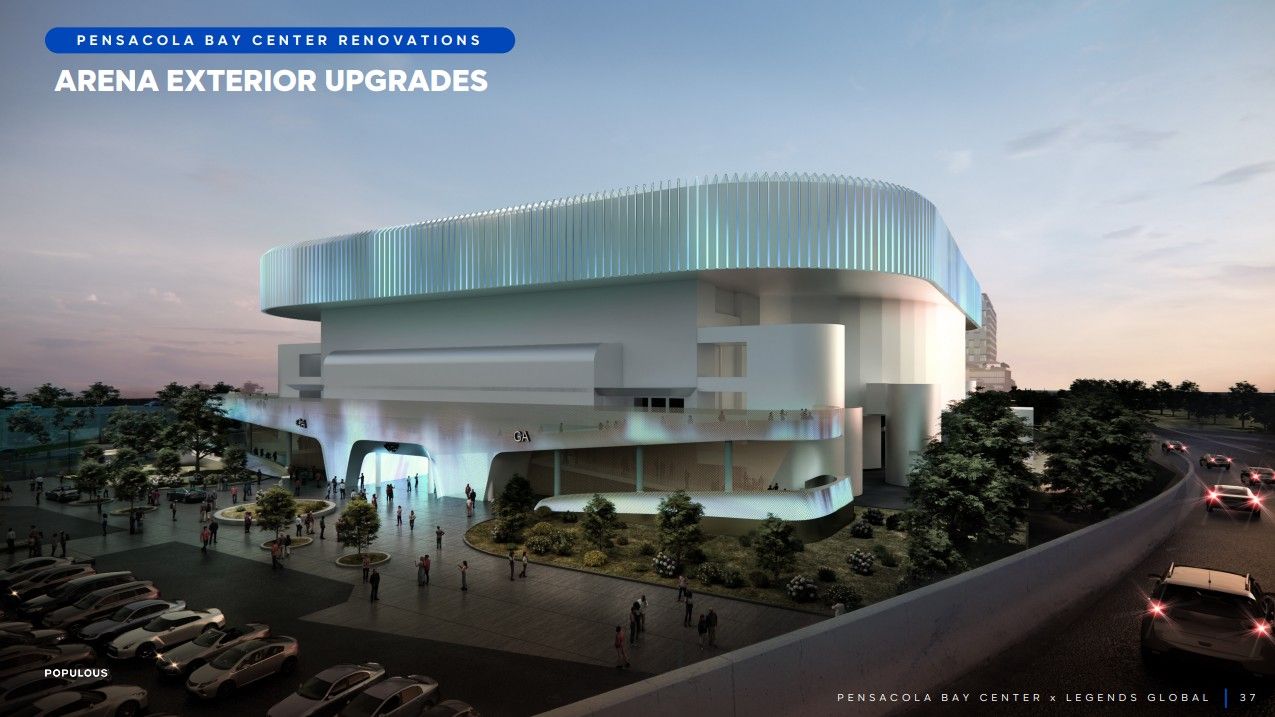
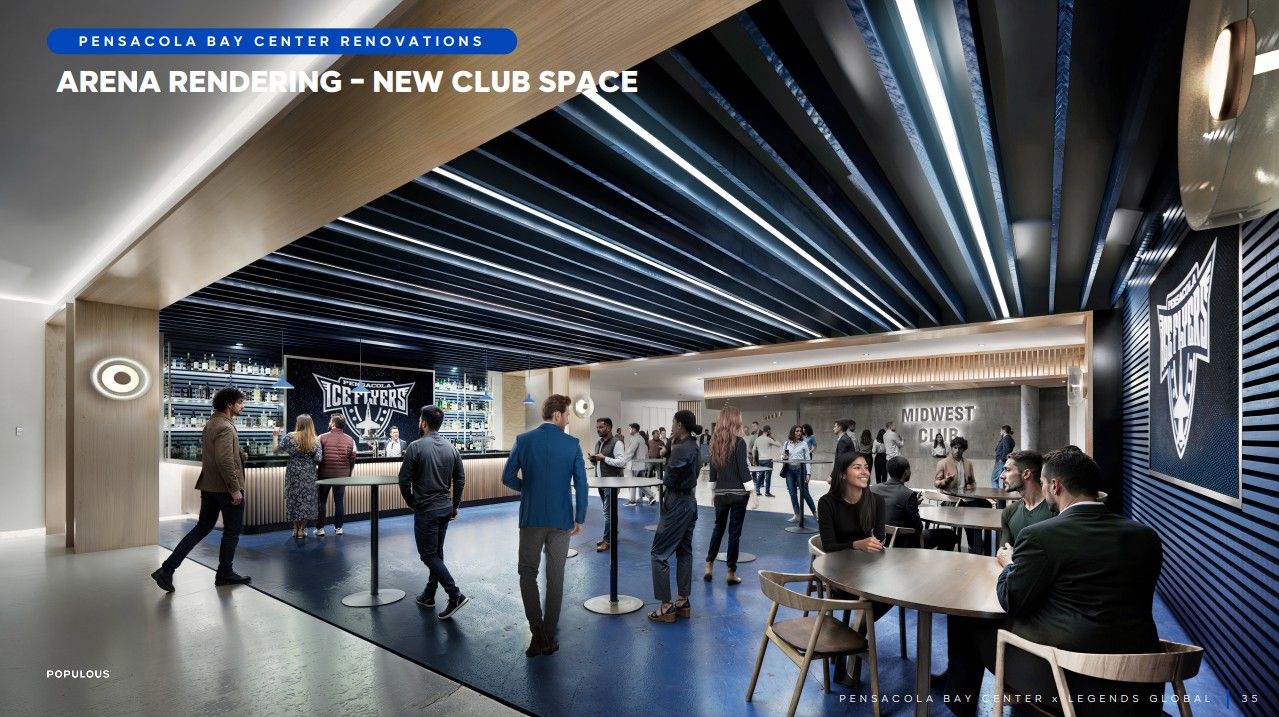
The proposal sitting in front of county commissioners is ambitious, I'll give it that: Featuring a shiny new 105,000-square-foot event center clocking in at $84.4M, a practice ice rink that'll run another $29.8M, and the matter of gutting and renovating the existing 40-year-old arena to the tune of $71M because apparently the building that opened when Reagan was president needs more than a fresh coat of paint.
To put that $189M figure in perspective, consider this: the complete replacement of the Pensacola Bay Bridge - that massive infrastructure project that gave the region fits for years, just barely survived Hurricane Sally, and now carries six lanes of US-98 traffic across three miles of open water - cost approximately $600M. Of course, that was a state project backed by FDOT's considerably deeper pockets, while the Bay Center renovation falls squarely on Escambia County's shoulders with only TDT funds to work with.
We're talking about a county spending roughly a third of what the state paid to build an entirely new bridge across Pensacola Bay, except this time there's no Tallahassee cavalry riding in to help foot the bill. Whether that comparison makes the Bay Center project seem ambitious or reckless probably depends on which side of the TDT funding debate you fall, but it's worth keeping in mind as we wade through the pretty pictures and economic projections.
The Promise of Actually Making Money
The feasibility study from CSL and Legends Global makes a bold claim that I'm sure has caught the attention of every taxpayer who's watched the Bay Center hemorrhage public funds for decades: this revamped campus could generate $3.8M in net operating income by 2031, and when I say net operating income I mean actual black ink on the ledger rather than the "slightly reduced losses" or "improved deficit performance" language we've grown accustomed to hearing.
If you've followed the Bay Center's financial history at all, you know this sounds almost fantastical, given that the venue has operated in the red for most of its existence, with former County Commissioner W.D. Childers himself calling it an "albatross" back in 2001 after yet another year of failing to turn a profit. The lone exception in the building's multi-decade history came in 1997, when the Ice Pilots' inaugural season somehow scraped together a whopping $4.8K surplus - $4.8K, which represents the high-water mark for profitability in this building's four-decade existence, and which wouldn't cover the catering budget for a single county commission meeting. (I joke of course… I think?)
So forgive me if I'm simultaneously intrigued and deeply suspicious when consultants start projecting millions in positive returns, though I suppose the counterargument is that you can't keep doing what you've always done and expect different results.
Where's the Money Coming From?
The funding mechanism here matters quite a bit, and it's something that tends to get glossed over in the excitement of architectural renderings and economic impact projections. Tourist Development Tax dollars - the bed tax collected from visitors staying in local hotels - would finance this project, which means the money is legally restricted in how it can be spent and can't simply be redirected to repave County Road 164 or hire more police officers for North Escambia, however much some residents might prefer that outcome.
The study projects that the combined three-facility campus would host 473,200 attendee days annually, with nearly 50,000 hotel room nights generated by non-local visitors, direct spending of $35.1M, indirect and induced spending of another $24.1M, and employment for 748 people - almost $60M in total annual economic impact if the consultants' projections hold true. In terms of return on investment, we're looking at roughly 32 cents of annual economic impact for every dollar spent on construction, which sounds decent until you remember that economic impact studies have a somewhat deserved reputation for optimistic assumptions and rosy scenarios.
It's what we in the software development world call "optimistic programming".
Stay in the Loop
Get notified when we add new tools and features
Thank You!
You're all set. We'll keep you updated with the latest tools and features.
The more pressing financial concern involves timing: Mayor D.C. Reeves and Commissioner Mike Kohler have been pushing to bond TDT funds before July 2026 specifically because of concerns that state legislative changes might redirect those dollars for other purposes, which tells you something about how politically charged this money has become and how quickly the window for action might close.
The Pensacon Problem: A Canary in the Coal Mine
Talk to anyone who's attended Pensacon in the last few years, because that convention has become the perfect case study in what happens when an event outgrows its venue while the county drags its feet on improvements for which the venue's own operators have been advocating for, ad infinitum.
The convention has pumped nearly $30M into the local economy since 2014, transforming downtown Pensacola for one long weekend each February into something resembling a nerd mecca. This thing matters to the community in ways that transcend typical civic event metrics, and yet the experience of actually attending Pensacon has become increasingly miserable precisely because the Bay Center can't handle what the convention has become.
To their credit, Pensacon's leadership has acknowledged the venue constraints repeatedly over the years, and Julio Diaz, the convention's media director, spent hours on Reddit recently addressing these exact concerns while explaining that from day one Pensacon has been a multi-venue operation spread across downtown precisely because the Bay Center alone can't contain it. The loss of the Pensacola Grand Hotel after Hurricane Sally in 2020 only made things worse, since that space used to absorb overflow programming that now has nowhere to go, leaving organizers scrambling to find alternatives in a downtown that wasn't designed with convention infrastructure in mind.
The Parking Situation: How to Make Everyone Furious in One Easy Step
If there's one issue that unites Pensacola residents across political, geographic, and demographic lines, it's apparently the absolute certainty that nobody in local government understands parking, and the new development's requirement for 1,550 incremental parking spaces - 1,200 for the event center alone and another 350 for the practice ice rink - has done nothing to quell those concerns.
The current plan vaguely gestures toward using existing lots, with a parking garage mentioned as a possibility if more space is needed, which is exactly the kind of non-answer that transforms comment sections across local news sites and blogs into something resembling a digital town square riot.
"What really is needed is a multi level parking garage," one commenter noted with the exhausted resignation of someone who's probably been making this point for years, while another was considerably less diplomatic: "NO PARKING; YOU IDIOTS!!" A third complained that there's no view of the old hotel building or the cemetery in the renderings, "nothing to show any respect for all of the old stuff in the immediate area that will have to be worked around," and the cramped geography of the current site isn't something you can architect away no matter how talented your design team might be.
Stay in the Loop
Get notified when we add new tools and features
Thank You!
You're all set. We'll keep you updated with the latest tools and features.
Meanwhile, local businesses in downtown Pensacola have discovered their own solution to the parking shortage, and it's one that doesn't sit well with everyone. Private parking lot operators near the Bay Center have taken to monetizing their spaces during major events - concerts, hockey games, Pensacon - capitalizing on the limited official parking to charge premium rates that sometimes venture into predatory territory. The situation has gotten bad enough that Mayor D.C. Reeves has expressed strong desire to enforce state laws against private lots using misleading "municipal-style" signage, essentially tricking visitors into thinking they're paying the city when they're actually lining some private operator's pockets.
The city is looking to adapt state regulations to curb deceptive practices in this for-profit parking market, but the fundamental problem remains: when official parking is inadequate, private operators fill the gap with whatever the market will bear. Any serious Bay Center redevelopment plan needs to account for parking infrastructure as a core component rather than an afterthought, and the current proposal's vague gestures toward "maybe a parking garage if we need it" don't inspire confidence that this lesson has been learned.
One Reddit user, who'd designed their own replacement concept featuring a pro soccer stadium integrated with a new arena, captured the broader frustration: "my plan allows us to destroy the god awful bay center and build something that doesn't look like it was designed by some coked out architects in the 80s!" Harsh, maybe, but not unfair when you consider the building's brutalist aesthetic and increasingly apparent design failures - including an air conditioning system that has failed during major events, because nothing says "world-class venue" quite like marinating in your own sweat through a concert while wondering if the building might actively be trying to drive you away.
The Mobile Threat: Fear as a Motivator
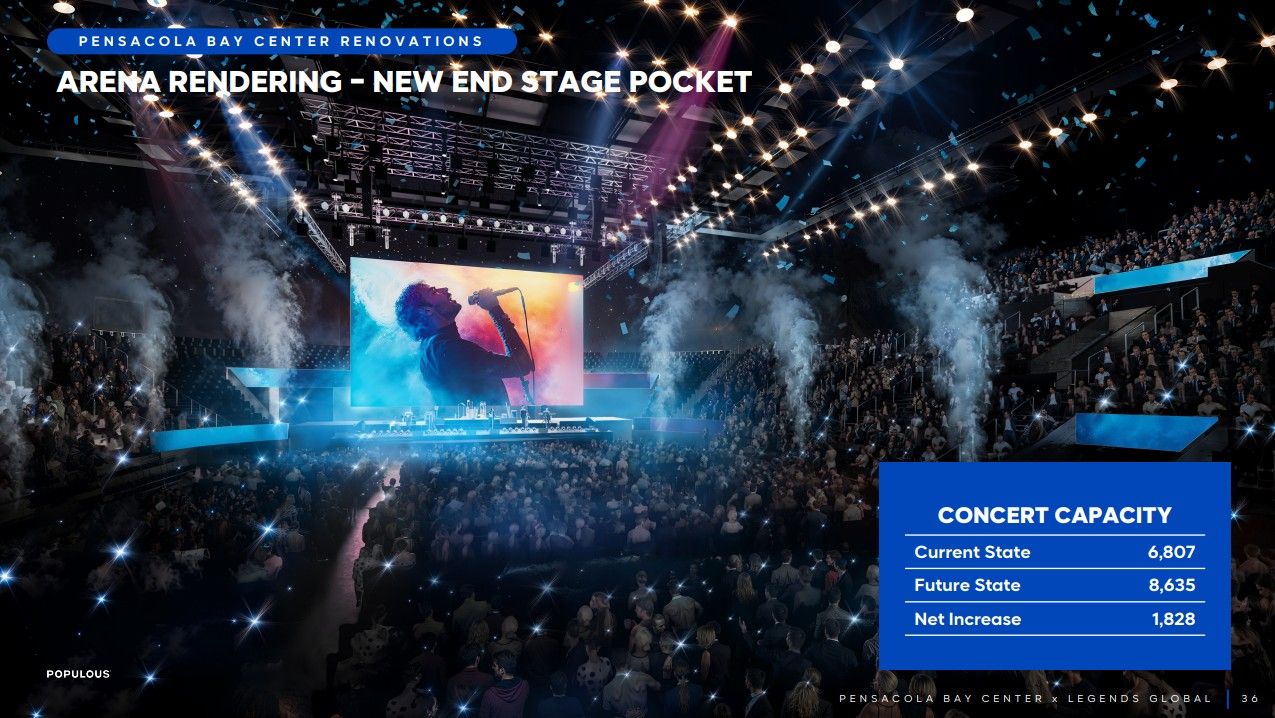
Sixty miles west, Mobile is building a brand new $300M, 10,000-seat civic center that will almost certainly poach whatever touring acts and major events Pensacola might have attracted, and this isn't paranoid coastal rivalry but rather basic economics: concert promoters book venues that deliver audiences in comfort with adequate amenities, so a gleaming new arena versus a 40-year-old facility with known infrastructure issues doesn't present much of a dilemma for booking agents.
The Bay Center used to be a starting point for major tours, back when Bon Jovi drew the arena's largest concert crowd ever in 1989, Janet Jackson opened her Rhythm Nation World Tour here in 1990, and Michael Jackson rehearsed for his Bad Tour at the venue. KISS, AC/DC, Rush, Van Halen - the list reads like a greatest hits compilation of arena rock and R&B, and while the Bay Center still draws touring acts, the competition for those bookings is about to get a lot stiffer with Mobile's new arena opening sixty miles down the road.
Meanwhile, North of Nine Mile...
Not everyone in Escambia County is thrilled about the prospect of dropping $189M on downtown amenities while roads in the northern part of the county literally fall apart, and this tension between urban investment and rural neglect runs deeper than most civic leaders want to acknowledge.
"Why not use the $189 Million to rebuild the roads and bridges in Escambia County?" one commenter asked, capturing a sentiment that runs deep in what locals sometimes call "the forgotten land" of North Escambia. Another was more pointed: "Up in the northern part of Escambia (the forgotten land) needs more roads to be repaved, more police officers to stop the speeders... We don't need improvements on this venue, just more improvements on roads around here."
The technical response - that TDT funds are legally restricted and can't be redirected to road paving - rarely soothes frustrated taxpayers who see shiny new downtown amenities getting funded while their neighborhoods decay. From their perspective, the money represents a choice, and the choice being made doesn't favor them.
The Smell Test (Literally)
I wish I was making this up, but one of the recurring complaints about the Bay Center involves how it smells, with one commenter writing that "the last time I was in the center it smelled bad and that doesn't make people want to return" before advocating to "tear it down" entirely rather than sink more money into renovation. Another described the venue as "an outdated, terribly planned relic which needs to be completely razed and rebuilt elsewhere in the city."
Now, I want to be fair here to the current management team at ASM Global, who've been tasked with maintaining and operating a facility that was already late-middle-aged when they took over and has only accumulated more deferred maintenance with each passing year. Running a 40-year-old civic center is a thankless job under the best circumstances - constantly playing whack-a-mole with aging systems, (probably) working with budgets that were inadequate a decade ago and haven't kept pace with inflation, and fielding complaints about problems they've been begging for funding to fix. The fact that the building functions at all is a testament to the staff who keep it running, even if "functions at all" falls short of what the community deserves.
Stay in the Loop
Get notified when we add new tools and features
Thank You!
You're all set. We'll keep you updated with the latest tools and features.
That said, $15M of the proposed renovation budget is earmarked for "deferred maintenance" - which is bureaucratic language for "fixing stuff that should have been fixed years ago and wasn't because nobody wanted to spend the money" - and you have to wonder how much of that $15M will go toward addressing whatever's causing the smell complaints, and whether fixing 40 years of accumulated neglect is even possible at this point or whether some problems have become structural in ways that no amount of money can fully remedy.
A Phased Approach: The Art of Having It Both Ways
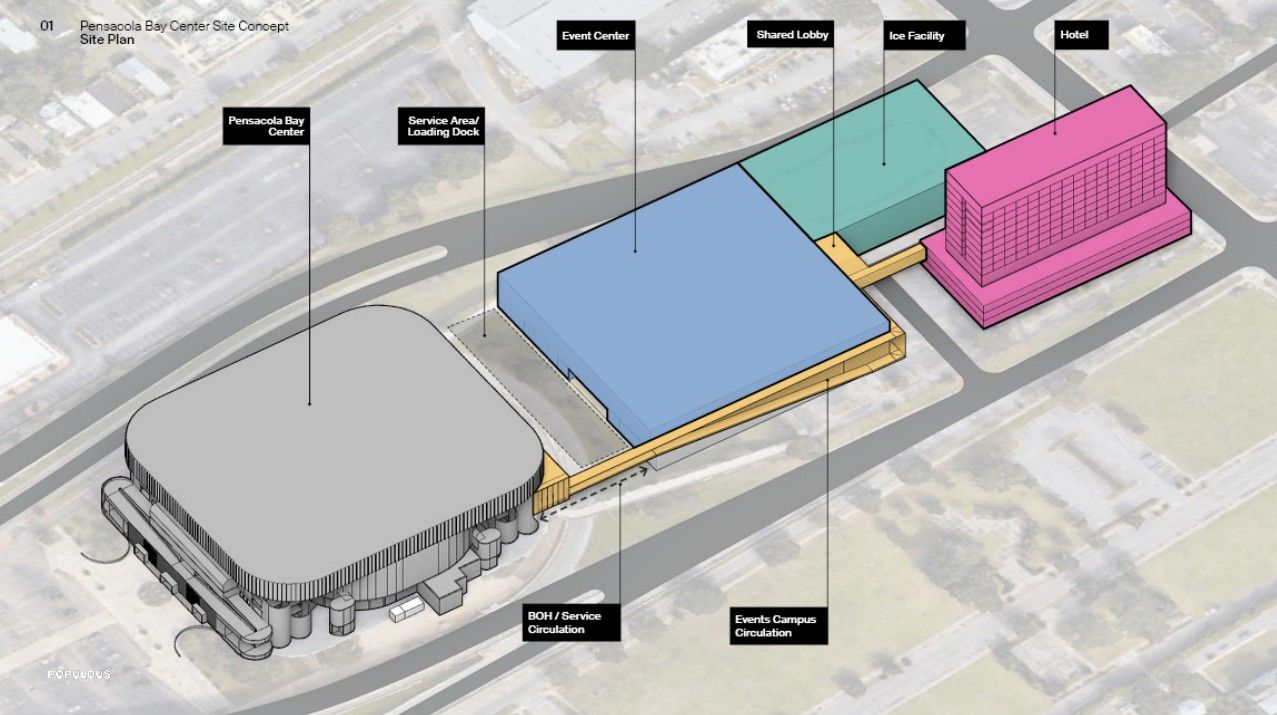
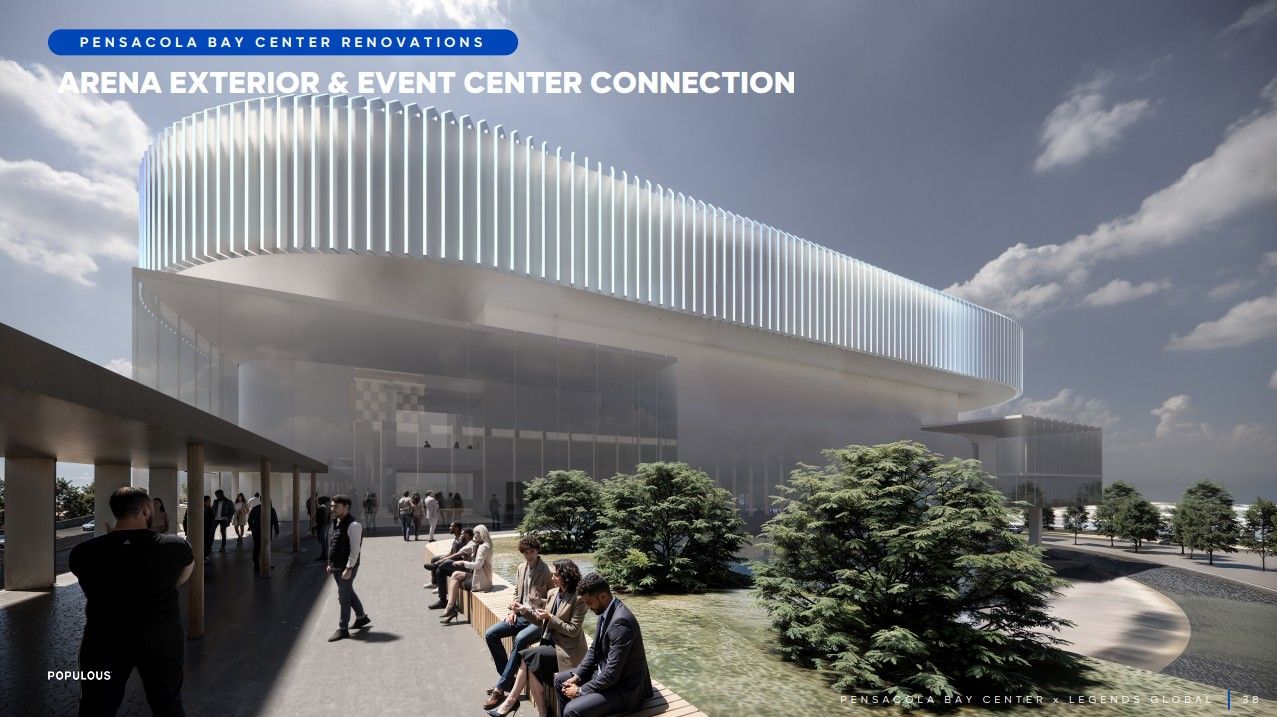
One aspect of the proposal that deserves more attention is the potential for phased implementation, which would allow construction to proceed in stages rather than requiring the entire campus to shut down for years while work gets completed. The integrated campus concept - with the new event center, practice ice rink, and renovated arena connected via enclosed walkways - lends itself to this kind of incremental approach, where you might complete the event center first, then the practice rink, then tackle the arena renovations while programming shifts to the new facilities.
This phased strategy comes with tradeoffs, naturally. Spreading construction across multiple years almost certainly increases overall costs compared to doing everything at once, since you're mobilizing contractors multiple times, potentially dealing with material price fluctuations between phases, and extending the period during which you're paying interest on construction loans. But the alternative - shutting down the Bay Center entirely for an extended renovation period - creates its own problems, from displacing the Ice Flyers and other regular tenants to eliminating the venue as an option for events like Pensacon during the construction window.
The feasibility study suggests that the three facilities would achieve combined net operating income of $3.8M by 2031, but that projection assumes all components are operational and working in concert. A phased approach might delay reaching that financial milestone while also providing a proving ground for each component before committing to the next phase - not a bad thing if the event center opens and immediately demonstrates demand that justifies the practice rink investment, or a very bad thing if early phases underperform and sour public appetite for continued construction.
The Pensacola That Never Was
Before we move on, imagine for a moment that W.D. Childers hadn't managed to secure that $12.5M state appropriation back in 1982, that Governor Bob Graham's veto pen had found its mark, that the corner of Gregory Street and 9th Avenue remained just another patch of underutilized downtown real estate.
In this alternate Pensacola, there's no home for minor league hockey, which means the Ice Pilots never arrive in 1996, the Ice Flyers never pick up that torch in 2009, and thousands of kids in Northwest Florida never learn to love a sport that has no natural roots in the region - no Friday night games becoming family traditions, no dads explaining icing calls to kids pressed against the glass, no community gathering point during those long months when football ends and baseball hasn't started.
Without a civic center capable of hosting large conventions, Mike Ensley either launches Pensacon in Mobile or Tallahassee, or doesn't launch it at all. The $30 million that convention has pumped into the local economy flows elsewhere.
Stay in the Loop
Get notified when we add new tools and features
Thank You!
You're all set. We'll keep you updated with the latest tools and features.
Downtown in this alternate 2026 lacks the anchor that draws people on weeknights and weekends year-round, which means fewer restaurants and bars find reasons to exist, which means the critical mass that makes a downtown feel alive never quite materializes. The city remains pleasant enough - nice beaches, historic architecture, good seafood - but it's a place you visit and forget about, rather than a regional destination with a year-round pulse.
This is the Pensacola that almost was, and it's worth holding in mind when we debate the $189M proposal, because the question isn't whether the Bay Center is perfect - everyone agrees it isn't - but whether letting it fade into irrelevance is something this community can afford.
What Success Actually Looks Like
Here's what keeps me from dismissing this whole proposal as another example of consultant-driven magical thinking: the alternative is worse, and doing nothing means the Bay Center continues its slow decline while Mobile's new arena opens and siphons events away from Pensacola, Pensacon either caps attendance (killing the economic impact) or watches the experience deteriorate further until the convention collapses under the weight of its own popularity, and the Ice Flyers play in an increasingly decrepit facility while potential concerts and trade shows don't even bother considering Pensacola.
Commissioner Lumon May raised an important concern when he noted that "most studies have resulted in a displacement of the people from this geographical area, unfortunately," which is a warning worth heeding as plans progress and one that speaks to a broader pattern in municipal development where promised community benefits somehow fail to materialize for the communities that were supposed to benefit.
Beyond the Blueprint
The architectural renderings are pretty, the economic projections are impressive, and the consultants presumably know their business - but success will be measured by whether the people who actually use this facility feel like the investment was worthwhile, which means fixing operational glitches that have plagued the Bay Center for decades while addressing parking in ways that don't simply push the problem onto frustrated private lot operators, ensuring cell reception works so convention apps actually function, and yes, making the building not smell weird.
It means bridging the gap between architectural vision and ground-level attendee experience, which is harder than drawing pretty pictures but ultimately what determines whether a civic investment succeeds or becomes another albatross around taxpayers' necks.
In short, it's lightning in a bottle, and I don't envy the shoulders upon which these decisions rest.
The Clock Grinds Inexorably Forward
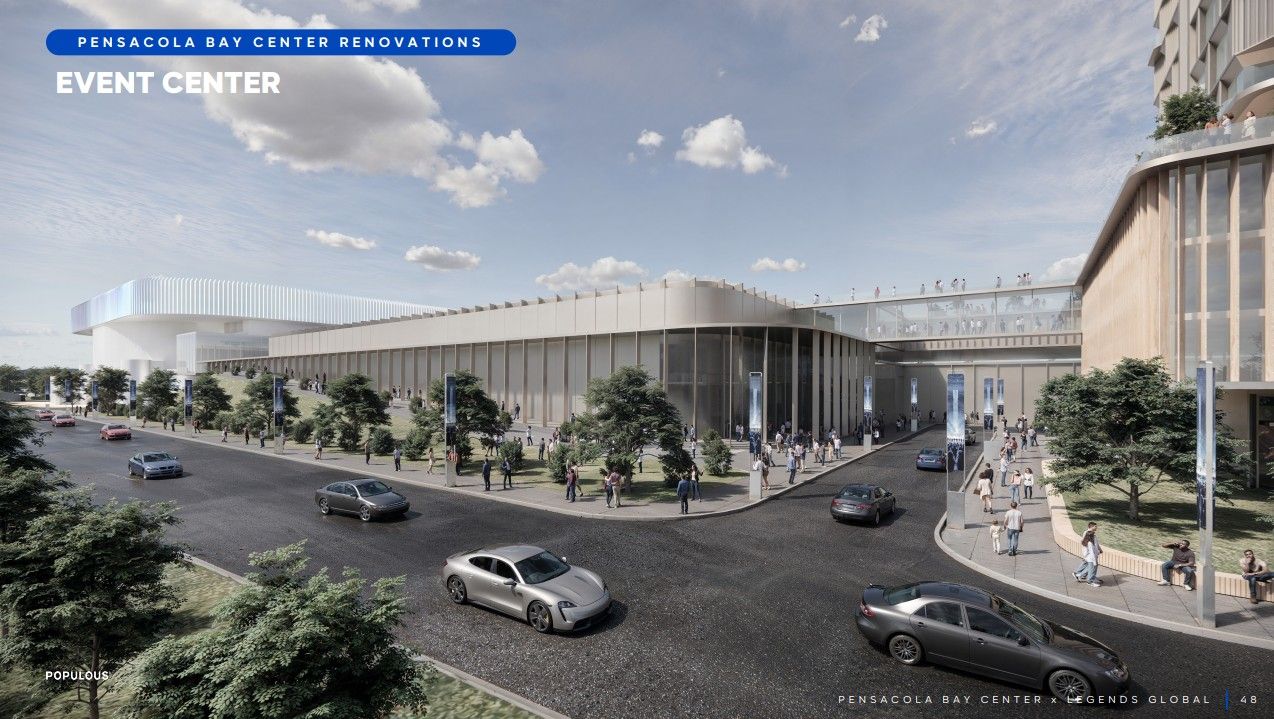
The Board of County Commissioners received the feasibility study on January 23rd, Mayor Reeves has his own consultant studying the surrounding area, and the clock is ticking on bonding those TDT funds before potential legislative changes redirect them elsewhere. Seven weeks until Pensacon 2026, years until any renovated facility could actually open, and a whole lot of skeptical residents watching to see whether this time - finally, after four decades of chronic underinvestment - their civic leaders can turn an albatross into an eagle.
I'm not holding my breath, but I'm not writing it off either, because sometimes betting on ambitious reinvention beats accepting an ungraceful failure, and those folks in Mobile aren't waiting around while the concert promoters, convention organizers, and tourism dollars flow to whoever builds the better mousetrap first.
Pensacon 2026 runs February 20-22 at the Bay Center and venues throughout downtown Pensacola.
Sources and Citations
- Pensacola News Journal from Pensacola, Florida, 2001
- ESCAMBIA COUNTY INCREASE EFFECTIVE APRIL 1, 2021 - Tourist Development Tax (TDT)
- This article about Pensacon's problems pretty much nails it - Reddit Discussion
- Future of Pensacola Grand Hotel still unclear - WEAR TV
- Mayor: 'Confusion' and 'predatory' practices of private lots - Rick's Blog
- Mobile unveils new renderings of arena at groundbreaking - NBC 15
- Pensacola Bay Center Staff Listing
- About ASM Global
- Escambia County District 3 - Commissioner Lumon May
Visit Us On: